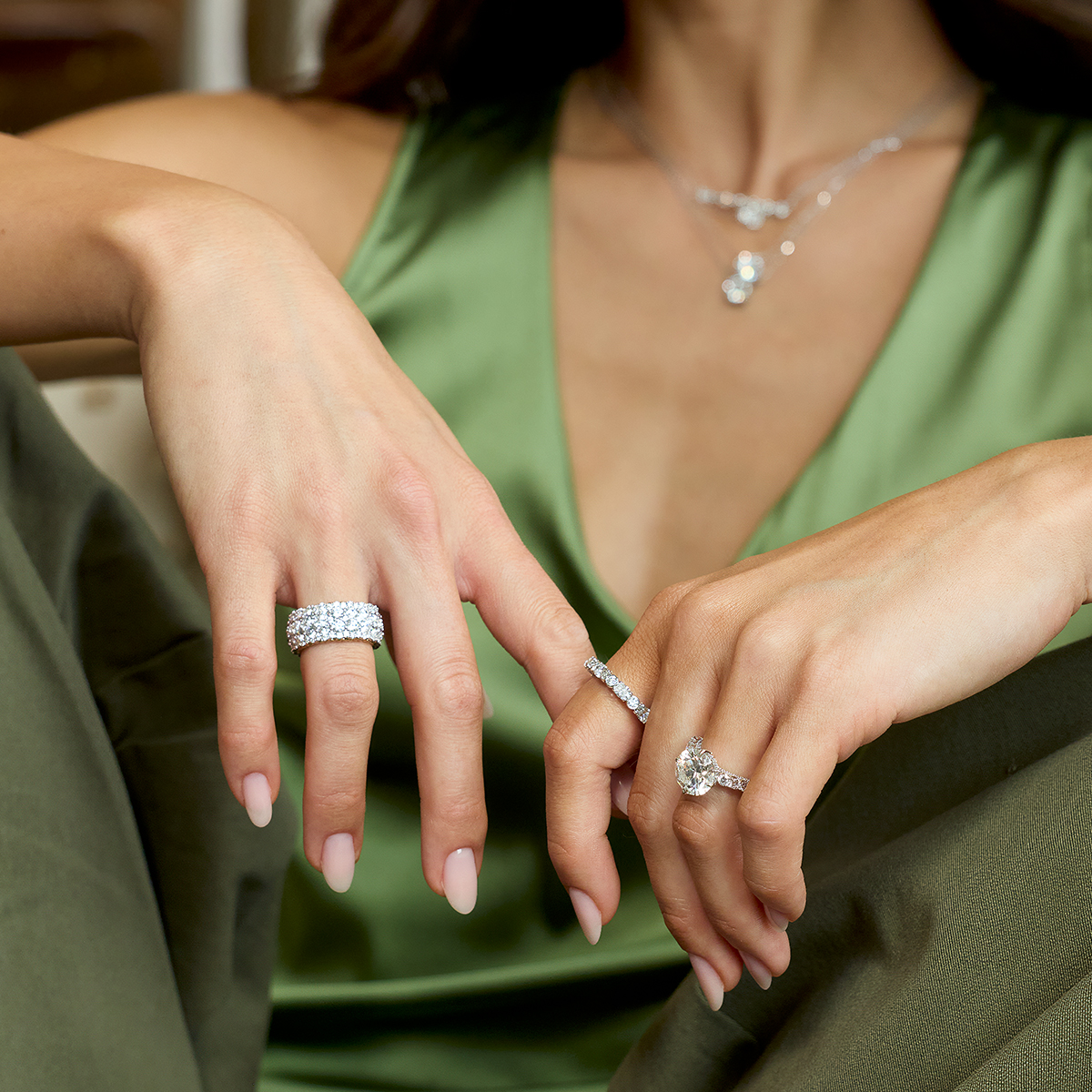
A wedding band is meant to become part of your everyday jewelry, often worn alongside an engagement ring for years to come. That makes the design worth considering beyond how it looks on its own. The band’s width, diamond setting, metal, and overall profile can all affect how it looks with an engagement ring and how it fits into your personal style.
For brides who want diamond detailing, there are several ways to approach the look. Some prefer a delicate row of diamonds, while others want a wider band or a more distinctive setting.
Here are some of the most versatile diamond wedding bands for womenand the bridal styles they complement.
1. Classic Pavé Diamond Bands
Pavé bands feature small diamonds set closely along the band, creating continuous diamond detailing across the ring.
Their appeal lies in the way they add brilliance along the band while allowing the engagement ring to remain the main focal point. A slim pavé band works particularly well with a solitaire engagement ring, while a wider version can complement rings with more elaborate settings.
Best for: Brides who want a classic diamond band with consistent detailing and a refined appearance.
2. Channel-Set Diamond Bands
In a channel setting, diamonds are placed between two metal rails, creating a smooth row across the band. The metal surrounds the diamonds while keeping the outer surface relatively streamlined.
This makes channel-set bands a practical choice for someone who prefers a clean look without prominent individual settings. They can also work well when the wedding ringwill be worn regularly on its own.
Best for: Brides who prefer protective setting, a smooth profile, and understated diamond detailing.
3. Eternity Bands
Eternity bands feature diamonds around the entire circumference of the ring, creating continuous diamond coverage.
Because the diamonds extend around the band, the design looks consistent from different angles. Full eternity bands are particularly suited to brides who want the wedding band itself to make a noticeable statement, while half-eternity versions place diamonds primarily across the visible portion of the band.
They can be paired with an engagement ring or styled independently, on the other hand.
Best for: Brides who want continuous diamond coverage and a more substantial bridal look.
4. Shared-Prong Diamond Bands
Shared-prong bands use neighboring prongs to secure adjacent diamonds. Because less metal sits between the diamonds, more of each diamond remains visible.
This creates a bright, diamond-forward appearance while keeping the band relatively delicate. Shared-prong designs can be especially effective when paired with an engagement ring that already has a detailed center setting.
Best for: Brides who want the diamonds along the wedding band to be particularly prominent.
5. Contoured and Curved Wedding Bands
Not every engagement ring sits neatly beside a straight band. A contoured or curved wedding band is shaped to follow the outline of the engagement ring, allowing the two rings to sit together more naturally.
This can be particularly useful for engagement ringswith larger center diamonds or settings that extend toward the band.
Curved bands can also introduce a distinctive shape to the bridal stack rather than simply following a straight line.
Best for: Brides who want the wedding band to fit closely around their engagement ring or prefer a more sculptural bridal stack.
6. Milgrain and Vintage-Inspired Diamond Bands
For brides who appreciate more intricate detailing, vintage-inspired bands can introduce character through features such as milgrain edges, engraving, filigree, or decorative metalwork.
These details can be combined with diamonds to create a band that feels more ornate than a simple pavé design. The look works particularly well with vintage-inspired engagement rings but can also create contrast alongside a simpler center ring.
Best for: Brides who prefer intricate craftsmanship and decorative details.
7. Wide Diamond Wedding Bands
A wedding band doesn't have to be delicate. Wider bands offer more surface area for diamond detailing and create a stronger visual presence on the finger.
A wide band can feature pavé diamonds, channel settings, geometric patterns, or a combination of different diamond shapes. It can also be worn alone when you want the wedding band to stand out rather than function only as part of a bridal stack.
Best for: Brides who prefer substantial jewelry and want the wedding band to have a defined presence.
8. Mixed-Metal Diamond Bands
Mixing metal tones is another way to give a wedding band a more personal look. Yellow gold, rose gold, platinum, and white gold can be combined within a bridal stack or used to create contrast between the ring and wedding band.
For example, a white gold wedding ring paired with a yellow gold diamond band creates a noticeable contrast while still allowing the diamonds to connect the two pieces visually.
Best for: Brides who enjoy combining different metal tones rather than matching every piece.
Final Thoughts
The right wedding band brings together the practical and aesthetic aspects of a bridal set. A slim pavé band can create a classic pairing, while an eternity band, wide diamond band, vintage-inspired design, or mixed-metal style can give the look more individuality.
Whether you prefer a coordinated bridal set or want to build a combination with contrasting details, the best wedding rings are those that feel comfortable, complement your engagement ring, and reflect how you want to wear your jewelry every day.